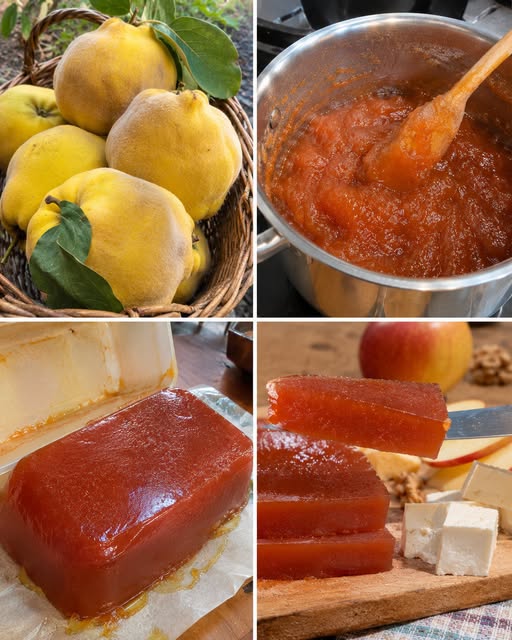
The quince is a highly unusual fruit. If you try to eat it raw, you will find it rock-hard, sour, and unpleasantly dry. However, this tough exterior hides a set of incredible culinary and practical powers. For generations, households have relied on the quince not just for its unique, perfume-like flavor, but for its physical properties. When exposed to heat and water, the quince completely transforms, turning sweet, soft, and beautifully pink.

Here is a breakdown of the most powerful and common ways to use the autumn quince in your kitchen, focusing purely on its practical and food-based uses.
Nature’s Most Powerful Homemade Pectin The most valuable secret of the quince is its massive pectin content. Pectin is the natural starch found in fruits that causes jams and jellies to thicken and set.
While most modern cooks buy packets of powdered pectin from the store, you can use quince to naturally thicken any jam you make. The pectin is highly concentrated in the skin, the core, and the seeds of the fruit.
- How to make a pectin base: Never throw away your quince peels and cores. Put them in a pot, cover them with water, and boil them for about 30 to 40 minutes.
- The result: The water will turn into a thick, slightly sticky liquid. Strain the scraps out, and you are left with pure, liquid quince pectin.
- How to use it: You can add this liquid to low-pectin fruits like strawberries, cherries, or peaches when making jam. It will help them set perfectly without altering their flavor, saving you money on commercial thickeners.
Traditional Quince Paste (Membrillo) Because the fruit is so rich in natural pectin, it can be cooked down into a paste so thick that you can literally slice it with a knife. In Spain and Latin America, this is called “dulce de membrillo,” but similar variations exist all over Europe.
- The process: The fruit is boiled until very soft, pureed into a smooth mash, and then cooked slowly with an equal amount of sugar.
- The transformation: As it cooks, the natural chemistry of the fruit causes it to change from a pale yellow to a stunning, deep ruby-red color.
- How to serve it: Once cooled, it sets into a firm block. It is traditionally sliced into small squares and served on top of sharp cheeses, or eaten on toasted bread. The sweet, floral flavor cuts perfectly through salty, savory foods.
The Classic Quince Compote For families with a large harvest, making quince compote is the easiest and most common way to preserve the fruit for winter. This is a sweet, non-alcoholic drink containing whole pieces of fruit.
- Simple preparation: The fruit is peeled, cored, and cut into thick slices or wedges.
- The boil: The wedges are placed in large glass canning jars, covered with water, and mixed with a few spoonfuls of sugar. Some people add a slice of lemon or a cinnamon stick for extra warmth.
- The result: After boiling the jars to seal them, the liquid inside turns into a rich, fragrant, sweet juice. The fruit wedges soften perfectly, making them a delicious dessert you can eat with a spoon right out of the jar.
Natural Remedies for the Cold Season Beyond food, the quince has been used as a traditional household remedy for mild winter ailments.
- Soothing sore throats: Quince seeds are covered in a natural substance called mucilage. If you take a spoonful of the dark brown seeds and soak them in a small glass of warm water overnight, they will release a thick, clear gel. This gel is completely safe to swallow and is traditionally used to coat and soothe dry, scratchy throats.
- Autumn tea: The leaves of the quince tree can be dried and steeped in hot water to make a mild, earthy tea that is historically used to calm upset stomachs and support digestion.
Baking and Savory Cooking Unlike apples, which often turn to mush when baked in an oven, the quince holds its shape incredibly well under high heat.
- In desserts: You can slice them and bake them into pies, tarts, and crumbles. They require a longer baking time than apples, but they reward you by retaining a satisfying bite and a gorgeous pink color.
- With meats: The tartness of the quince makes it a perfect pairing for heavy, savory dishes. Wedges of raw quince can be placed in a roasting pan alongside pork, chicken, or duck. As the meat cooks, the fruit absorbs the savory juices while adding a bright, floral contrast to the rich meat.

