My mother went in first. She moved slowly through the living room, trailing one hand along the back of the sofa, into the kitchen, where she stopped at the window over the sink and looked at the trees and the light beyond them.
She opened the refrigerator and stood looking at the full shelves, the orange juice, the wine, the produce, and then closed it.
She found the recipe box in the silverware drawer. She read the card.
She sat down at the kitchen table and pressed the card to her chest and cried. Not the tight, managed crying of anxiety. Something deep and ragged and completely unselfconscious. The crying of someone who has been carrying something for a very long time and finally, in a specific place, sets it down.
My father walked the whole house and touched everything — door frames, walls, the banister. He stood at the back window looking at the slice of water visible through the trees and said very quietly, to no one in particular, “It’s solid.”
He wasn’t talking about the house.
That night, we had my mother’s sandwiches on the deck and drank the wine and watched the sky go from silver to black. The gulls called in the distance. My parents held hands.
“I keep waiting for someone to knock on the door,” my mother whispered, her head on my father’s shoulder.
“No one is coming,” I told her. “It’s yours.”
“I haven’t slept through the night in thirty years,” my father said. Not to anyone exactly, just into the dark. “I think I might tonight.”
That feeling lasted forty-eight hours.
My mother called me on a Sunday while I was finishing a chart review after a long shift.
“Hi, honey.”
A pause. The texture of someone deciding how to start.
“Everything’s wonderful here. I made soup. I wanted to mention Dana called.”
I didn’t say anything.
“She heard about the house. She’s just so excited for us. She wants to come see it. Just lunch, just to celebrate.”
My mother’s voice had taken on the particular cadence she uses when she’s asking for something she knows I might not want to give.
“I thought it would be nice.”
“Mom, you just got there. You’re still settling in.”
“It’s your sister. What’s the harm in that? Just an afternoon.”
I told her fine. Day visit only, lunch, and they leave before dinner. I told her to call me if anything felt wrong.
She said I worried too much.
She didn’t call me Saturday.
I called her at five. Voicemail.
I called my father. He answered on the second ring. His voice was performing normalcy over something that wasn’t.
“They decided to stay for dinner,” he said. “Dana thought it would be nice to watch the sunset.”
“Are they still there now?”
“Marcus is.” He stopped. “Yes, they’re still here.”
“Call me when they leave, Dad.”
He didn’t call.
Seven o’clock.
The next morning, my mother answered and was whispering.
“I can’t really talk. Marcus is asleep on the couch.” The new couch, the oatmeal-colored sofa I had chosen. “The kids are in your room.”
“Mom, when are they leaving?”
“Maybe Tuesday. Marcus wants to take the kids to see the lighthouse.”
“Mom—” I stopped myself, took a breath. “Tell me what’s been happening.”
A long pause.
“He’s been loud,” she said, which in my mother’s language covered a range of things that had probably been significant. “Your father has been spending most of his time on the deck.”
I was already calculating drive time.
“I’m coming Wednesday. Don’t tell them.”
“Mara, please don’t make—”
“I’m not going to make anything. I’m coming to see you.”
I spent Monday on the phone with my attorney, confirming what I needed to confirm — that, as trustee, my authority to require non-permitted occupants to vacate was clearly established and could be exercised without a court process, provided I gave verbal and written notice and a reasonable window to comply.
She confirmed it.
I called Victor at Mid Coast Lock and put him on standby. Gave him my card for a deposit.
I stopped at a bakery Tuesday morning and ordered a chocolate cake for pickup Wednesday. I told myself the cake was because I was coming to see my parents. That was also true.
Wednesday morning, I picked up the cake and put it on the back seat. I texted Victor on my way. “ETA noon. Please head toward the address and I’ll text you when I’m fifteen out.”
The drive north did the same thing it always does. The trees got taller. The light got better. The world quieted down.
But I wasn’t quiet. I went through the sequence in my head methodically, the way I run through a difficult procedure before I begin. What I had, what it meant, what I was going to do in what order.
Fifteen miles out, I texted Victor. “Fifteen minutes.”
He replied, “On my way.”
I pulled onto the gravel lane.
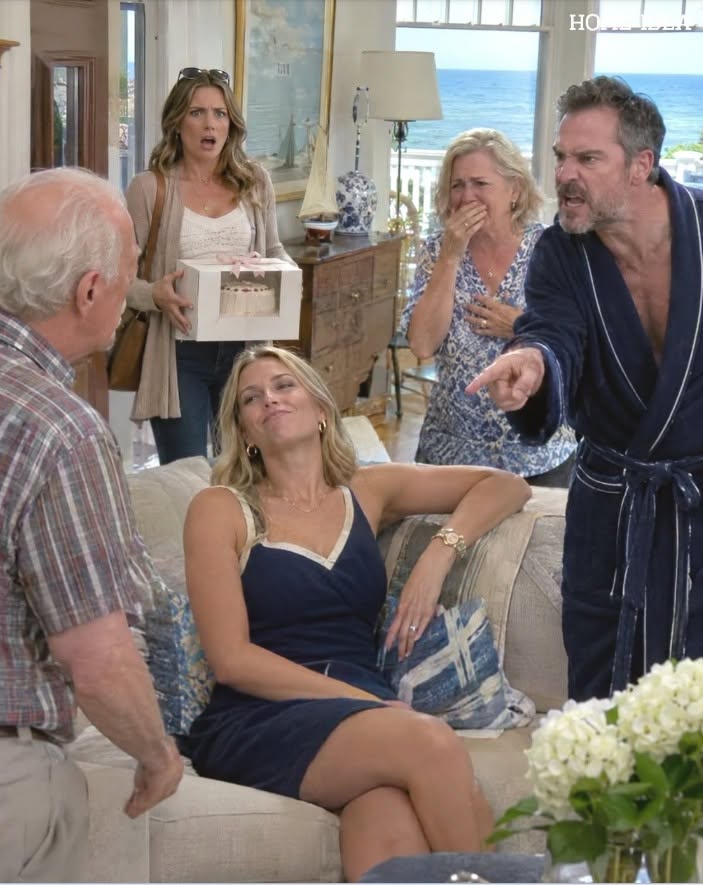
My brother-in-law’s truck was parked sideways on the lawn. A mattress was strapped to the roof with bungee cords, half unloaded, front door wide open.
I got the cake off the back seat. I walked inside.
The smell hit me first. Stale beer and wet dog and the warm, sour smell of fast food that has been sitting in wrappers too long. Not the smell of the house I had prepared. That house had smelled like paint and cedar and salt air. This was the smell of a space being occupied without accountability.
The entryway rug was dark with tracked mud. Shoes heaped against the wall, not lined up. A duffel bag dropped and not moved through the living room doorway. Chip bags open on the coffee table. A dried juice ring on the side table. The throw blanket balled on the floor.
The armchair, my father’s recliner, the one I had tested eleven different times to find the right lumbar support, was matted dark with dog hair across the seat and one arm.
Leo and Becca were on the sofa. Leo, seven, was sitting upright with the remote, watching the TV with the careful attention of a child pretending not to notice an adult’s arrival. Becca, four, just looked at me directly, and then away, and then back again.
Marcus was in the kitchen, leaning against the counter on his phone. I heard him before I saw him.
“Right on the water, man. The whole summer, rent-free. I’m telling you, we are set.”
He turned and saw me. Not guilty, annoyed. The specific annoyance of someone who views your arrival as a scheduling complication they’ve already worked around in their head.
He ended the call, glanced at my father.
My father was in the corner of his own living room, sitting in a dining chair someone had dragged away from the kitchen table, hands on knees, staring at the floor. He looked smaller than I had ever seen him. He was wearing a different shirt than he’d had on when I’d last visited. Someone had apparently displaced him from his own wardrobe rhythm along with everything else.
See more on the next page

