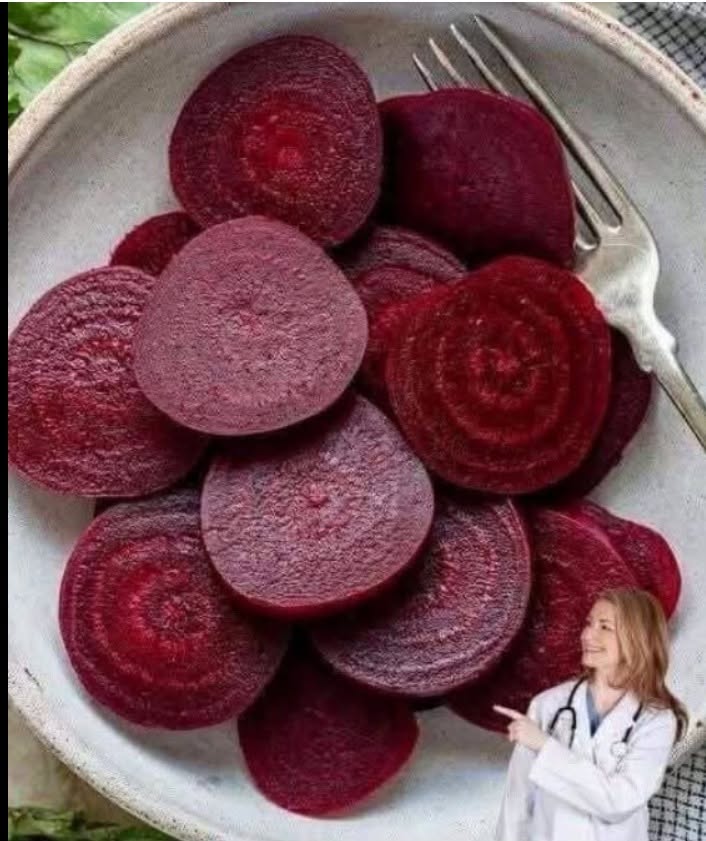
8. Beets May Contribute to Heart Health
Cardiovascular health depends on several interconnected factors, including blood pressure, blood vessel function, cholesterol levels, physical activity, and long-term dietary habits.
Beets contain nutrients and plant compounds that may support some of these processes.
Their dietary nitrates may influence nitric oxide production and vascular function, while their fiber contributes to a dietary pattern associated with cardiovascular wellness.
Potassium also plays a role in normal blood pressure regulation.
However, these individual properties should not be interpreted as evidence that beets prevent heart attacks or cure cardiovascular disease.
Research has identified potentially beneficial effects on certain cardiovascular measurements, but more studies are needed to establish how regular consumption affects long-term clinical outcomes.
The most practical approach is to enjoy beets alongside other vegetables, fruits, whole grains, and nutritious foods rather than depending on a single ingredient for heart protection.
9. Your Urine or Stool May Change Color
One of the most surprising effects of eating beets regularly has nothing to do with how you feel.
Instead, it involves a visible change that can sometimes cause unnecessary concern.
After eating red beets, some people notice that their urine becomes pink or reddish.
This phenomenon is known as beeturia.
It occurs when beet pigments pass through the digestive system and are eventually eliminated in urine.
These same pigments can sometimes give stool a reddish appearance.
For most people, this temporary color change is harmless and disappears after the pigments have passed through the body.
Not everyone experiences beeturia, and its occurrence can vary from one individual to another.
However, red urine or stool should never automatically be attributed to beets, especially when the discoloration is unexplained, persistent, or accompanied by symptoms.
Blood in urine or stool can have medical causes and may require prompt evaluation.
10. Beets May Influence Your Overall Fiber Intake
Many people do not consistently consume enough dietary fiber through their everyday meals.
Including fiber-containing vegetables such as beets can help improve the nutritional variety of the diet.
Fiber supports digestive regularity and can contribute to healthy cholesterol and blood sugar management as part of an overall eating pattern.
These effects are associated with adequate dietary fiber consumption rather than a special property unique to beets.
This distinction is important because beet juice, although a source of certain nutrients and dietary nitrates, typically lacks much of the fiber found in the whole vegetable.
Eating whole beets therefore offers nutritional advantages that may not be fully preserved when the vegetable is processed into juice.
11. Can Eating Beets Help Your Brain?
The possible relationship between beetroot consumption and brain health has become an area of scientific interest.
The proposed connection involves dietary nitrates, nitric oxide, and blood flow.
Since nitric oxide can influence blood vessel function, researchers have explored whether nitrate-rich foods might affect circulation in areas of the brain.
Some small studies have investigated changes in cerebral blood flow following dietary nitrate consumption.
However, evidence that eating beets regularly improves memory, prevents cognitive decline, or protects against dementia remains insufficient.
Maintaining brain health involves many factors, including physical activity, sleep, cardiovascular health, and overall nutrition.
Beets can contribute to a healthy eating pattern, but they should not be viewed as a proven treatment for memory loss or other neurological conditions.
12. Do Beets Help Reduce Inflammation?
Beets contain betalains and other plant compounds that have demonstrated antioxidant and anti-inflammatory activity in laboratory research.
Inflammation is a normal biological response that helps the body react to injury and infection.
Problems can arise when inflammatory processes become excessive or persist inappropriately.
Researchers are interested in whether compounds found in vegetables such as beets may influence these pathways.
Although preliminary findings are encouraging, human research has not established that ordinary beet consumption treats chronic inflammatory diseases.
Eating a variety of plant foods remains a more dependable nutritional strategy than relying on any one vegetable to control inflammation.
13. What Happens If You Eat Beets Every Day?
For most healthy adults, including beets regularly in meals is generally safe.
Over time, this habit can contribute additional fiber, folate, potassium, and naturally occurring plant compounds to the diet.
Depending on the amount consumed and individual health factors, dietary nitrates from beets may also influence blood vessel function and blood pressure.
However, there is no guarantee that eating beets every day will produce noticeable physical changes.
You may not feel any immediate difference, even while benefiting from the nutrients they provide.
It is also unnecessary to eat beets daily to enjoy their nutritional advantages.
Including them several times as part of a varied eating pattern can be a practical option for people who enjoy their flavor.
14. Are Raw Beets Better Than Cooked Beets?
Both raw and cooked beets can be nutritious.
Raw beets have a firm, crunchy texture and an earthy flavor. They can be grated or sliced into salads and other cold dishes.
Cooking softens their texture and often makes their natural sweetness more noticeable.
Methods such as roasting and steaming provide different flavors and textures while allowing beets to remain part of a balanced meal.
Cooking can alter the amounts of certain nutrients and plant compounds, particularly when water-soluble substances move into cooking water.
Nevertheless, cooked beets still contain valuable nutrients, and there is no need to eat them exclusively raw.
The most useful preparation is often the one that makes the vegetable enjoyable enough to include regularly.
15. Whole Beets vs. Beet Juice: Which Is Better?
Whole beets and beet juice share some nutritional characteristics, but they are not identical.
Whole beets provide fiber along with their naturally occurring vitamins, minerals, and plant compounds.
Beet juice can offer a more concentrated source of dietary nitrates, depending on how it is prepared and the amount consumed.
However, conventional juicing removes much of the vegetable’s fiber.
Drinking beet juice can also make it easier to consume the equivalent of several beets in a relatively small volume.
For everyday nutrition and digestive health, whole beets are generally a useful choice.
Beet juice may have specific applications in research involving dietary nitrates and exercise performance, but concentrated consumption is not necessary for everyone.
16. Possible Side Effects of Eating Beets Regularly
Although beets are generally safe for most people, there are several considerations worth understanding.
Kidney Stone Risk
Beets contain naturally occurring oxalates, which can contribute to the formation of calcium oxalate kidney stones in susceptible individuals.
This does not mean that everyone who eats beets will develop kidney stones.
However, people with a history of calcium oxalate stones may need to monitor their intake of certain high-oxalate foods according to medical advice.
Blood Pressure Considerations
Because nitrate-rich beet products may lower blood pressure, people with naturally low blood pressure or those taking blood pressure medication should use caution with large amounts of concentrated beet juice.
Ordinary dietary servings and concentrated supplements should not be treated as equivalent.
Digestive Discomfort
As with other fiber-containing vegetables, suddenly increasing the quantity of beets in your diet may contribute to gas or digestive discomfort in some people.
Increasing dietary fiber gradually can help make the adjustment more comfortable.
Temporary Color Changes
Red or pink urine and reddish stool can occur after consuming red beets because of their natural pigments.
Although this effect is usually harmless, unexplained or persistent discoloration should be discussed with a healthcare professional.
See more on the next page

